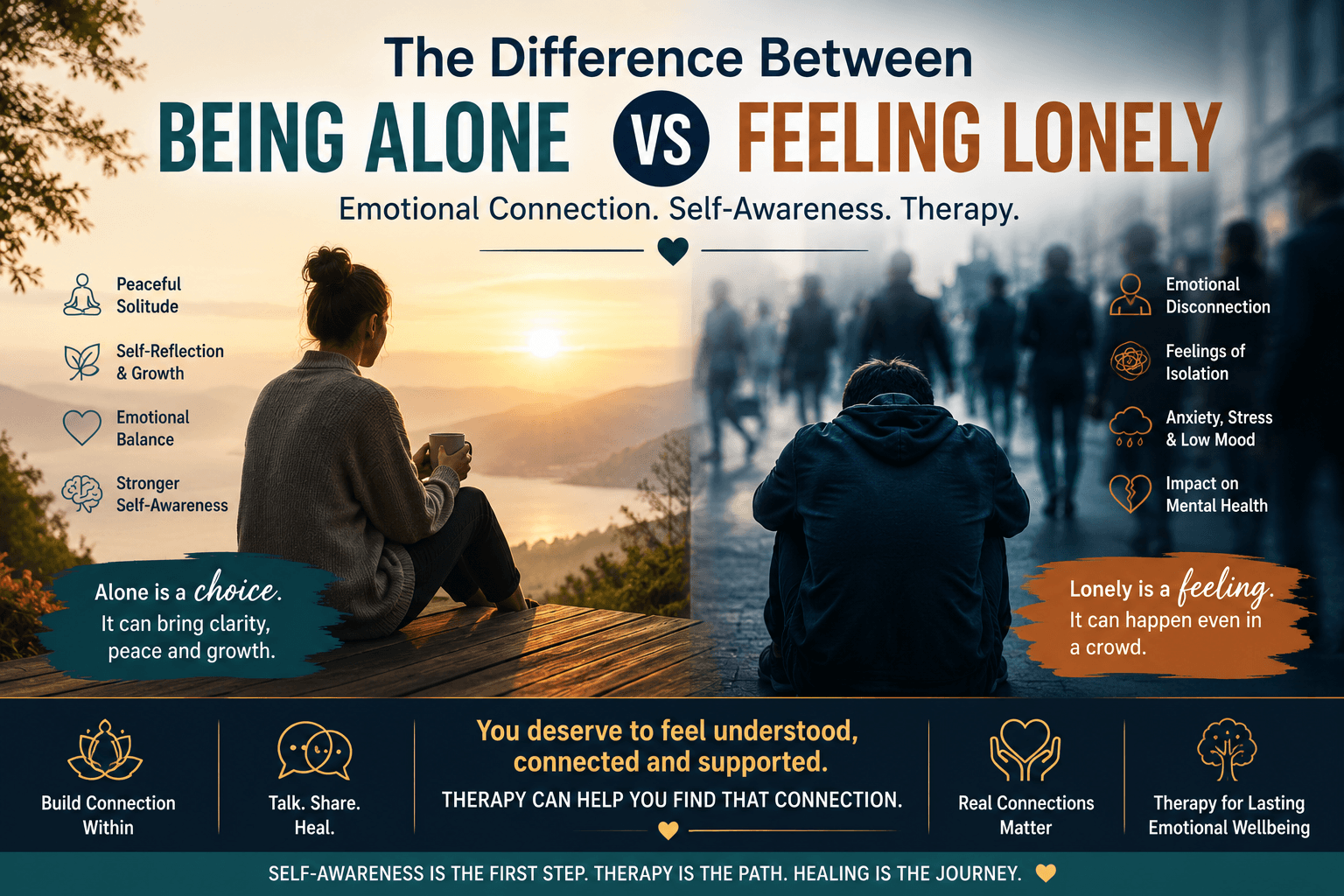
The Difference Between Being Alone and Feeling Lonely
The Difference Between Being Alone and Feeling Lonely
In today’s fast-moving world, loneliness has become one of the most common emotional struggles people face. Yet many people misunderstand what loneliness actually means. Being alone and feeling lonely are not the same thing. A person can spend an entire weekend alone and feel calm, refreshed, and emotionally balanced. At the same time, someone can be surrounded by family, friends, coworkers, and social events yet feel deeply lonely.
At India Therapist, this distinction comes up frequently in therapy sessions. Many clients, especially NRIs living abroad, express confusion about why they feel lonely despite having successful careers, relationships, and active social lives. The answer often lies in emotional connection rather than physical presence. Loneliness is not about the number of people around you; it is about the quality of connection you feel with yourself and others.
Understanding the difference between solitude and loneliness can be the first step toward improving mental health, emotional wellbeing, and overall life satisfaction.
What Does It Mean to Be Alone?
Being alone is a physical state. It simply means spending time by yourself. For many people, solitude can be healthy and restorative. It provides space for reflection, creativity, personal growth, and emotional recovery. Some of life’s most meaningful moments happen in solitude.
When you are comfortable with yourself, being alone does not feel threatening. Instead, it becomes an opportunity to reconnect with your thoughts, values, and emotions. Many people use alone time for reading, meditation, exercise, journaling, or simply resting.
Indian therapy often encourages individuals to develop a healthy relationship with solitude. Learning to enjoy your own company builds self-awareness and emotional independence. It helps you understand that your worth is not dependent on constant external validation.
In fact, many therapists in India believe that healthy solitude is an important part of emotional wellness and stress management.
What Does It Mean to Feel Lonely?
Loneliness is an emotional experience. It occurs when there is a gap between the connection you desire and the connection you actually feel. You can be surrounded by people and still feel unseen, unheard, and misunderstood.
This is why loneliness often surprises people. They assume that social interaction automatically prevents loneliness. In reality, loneliness is about emotional closeness, not physical proximity.
For many Indians and NRIs, loneliness emerges when they feel disconnected from their support systems, culture, relationships, or even themselves. Some people experience loneliness after moving abroad. Others feel lonely within marriages, friendships, or family environments where emotional communication is limited.
An experienced therapist in India once described loneliness as:
"The feeling that nobody truly knows what is happening inside you."
That emotional isolation can significantly affect mental health and emotional wellbeing over time.
Why Loneliness Is So Common Among NRIs
For NRIs, loneliness often takes on a unique form. Living abroad offers opportunities and financial stability, but it can also create emotional distance from familiar people, traditions, and cultural environments.
Many NRIs spend years building careers and adapting to new countries. During this process, relationships back home naturally change. Parents age. Friends move on. Family gatherings happen without them. Over time, a subtle feeling of disconnection develops.
Even successful professionals can experience loneliness when they feel they have no one with whom they can fully share their fears, struggles, and emotions.
NRI counselling mental health services frequently address these challenges. Through therapy India and online counseling, NRIs gain a safe space to discuss feelings that may otherwise remain hidden. Working with an Indian therapist online often feels more comfortable because cultural experiences and family dynamics are already understood.
This cultural familiarity creates emotional safety, which is often the first step toward healing loneliness.
The Impact of Loneliness on Mental Health
Loneliness affects more than emotions. Research consistently shows that prolonged loneliness can have serious effects on mental health and physical wellbeing.
Many individuals experiencing loneliness report symptoms such as anxiety, depression, chronic stress, emotional exhaustion, and low self-esteem. Sleep disturbances, lack of motivation, and increased overthinking are also common.
Therapists India frequently observe that loneliness creates a cycle. When people feel lonely, they may withdraw socially. This withdrawal reduces opportunities for meaningful connection, which deepens the loneliness further.
Over time, emotional isolation can make people feel disconnected not only from others but also from themselves.
This is why therapy in India increasingly focuses on helping individuals rebuild emotional awareness, self-worth, and healthy relationships.
The Importance of Emotional Connection
Human beings are naturally wired for connection. Emotional connection gives us a sense of safety, belonging, and understanding. It allows us to share our experiences without fear of judgment.
True connection does not require large social circles. A few meaningful relationships are often more valuable than dozens of superficial interactions.
Many people discover during therapy that their loneliness is not caused by a lack of people but by a lack of emotional intimacy. They have conversations every day but rarely discuss what truly matters to them.
Indian therapists online often help clients explore how vulnerability, communication, and emotional honesty contribute to deeper relationships. Through therapy, individuals learn how to express their needs, establish boundaries, and create healthier emotional connections.
How Self-Awareness Helps Reduce Loneliness
One of the most overlooked aspects of loneliness is the relationship you have with yourself. Sometimes loneliness is amplified because individuals have become disconnected from their own emotions, desires, and identity.
Self-awareness helps bridge that gap.
When you understand your emotional needs, recognize your triggers, and accept your feelings without judgment, you become less dependent on external validation. This creates a stronger internal foundation.
Therapy India often focuses on helping clients develop self-awareness through reflection, mindfulness, and emotional exploration. As self-awareness grows, many individuals notice a reduction in loneliness because they begin building a deeper connection with themselves.
This internal connection creates resilience even during periods of physical solitude.
How Therapy Helps You Build Meaningful Connection
Therapy provides more than emotional support. It helps individuals understand the underlying causes of loneliness and develop practical ways to create stronger relationships.
Working with an Indian therapist or therapist online India allows clients to explore:
Emotional barriers to connection
Fear of vulnerability
Relationship patterns
Anxiety and depression
Self-worth challenges
Communication difficulties
At IndiaTherapist.com, clients often describe therapy as the first place where they feel completely heard. Whether through online therapy, relationship counselling India, or NRI counselling mental health support, therapy creates a space where emotional connection can begin.
Many clients discover that healing loneliness is not about finding more people. It is about finding deeper, more authentic connections—with others and with themselves.
Finding Balance Between Solitude and Connection
The goal is not to avoid being alone. Healthy solitude can be deeply nourishing. The goal is to ensure that solitude remains a choice rather than a source of emotional pain.
Learning the difference between being alone and feeling lonely allows you to create a more balanced relationship with yourself and the people around you.
If loneliness has been affecting your mental health, emotional wellbeing, or quality of life, support is available.
At India Therapist, our team of best therapists in India, Indian therapists online, and therapist online India professionals help individuals and NRIs navigate loneliness, anxiety, depression, stress management, emotional healing, and personal growth.
📱 WhatsApp: +1 (425) 442-4167
💬 Message: "Hi, I'd like to speak with a therapist."
Because being alone is sometimes necessary.
But feeling lonely doesn't have to be permanent.
Ready to talk to someone who understands?
Connect with an Indian therapist who speaks your language and understands your cultural context.